4,790 Campbell Homes Predate the Seismic Code. Here Is What the Retrofit Involves.

Why This Matters in Campbell
Of the 6,855 parcels tracked in Campbell's housing record, 4,790 were built before 1980. The median year built across the market is 1963. That concentration of mid-century construction is the core issue: houses built before modern seismic codes often have two structural weaknesses that a retrofit is designed to fix.
Campbell sits in Seismic Design Category D2, per the City's own plan-check template. That designation reflects meaningful ground-shaking risk — not a hypothetical one.
Campbell's homes, from the record
| Built | Homes |
|---|---|
| before 1940 | 207 |
| 1940-1959 | 2,230 |
| 1960-1979 | 2,353 |
| 1980-1999 | 1,135 |
| 2000 or later | 771 |
| Single-family homes | 4,568 |
|---|---|
| Median lot | 7,500 sq ft |
| On an acre or more | 3 |
| Median size | 1,680 sq ft |
6,696 of 6,855 parcels in this market's record have a known build year.
The Two Structural Problems
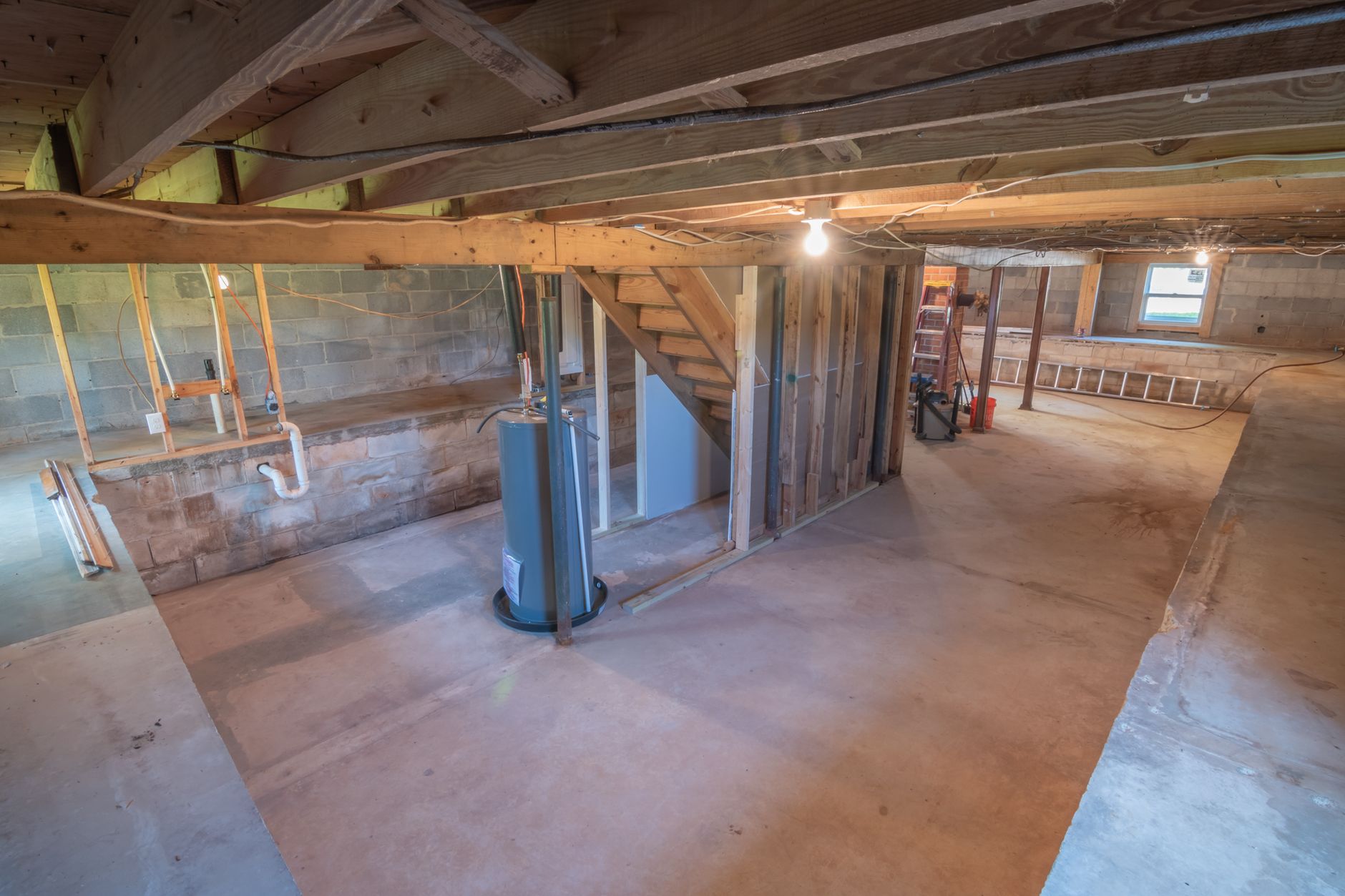
The frames of older houses are often not bolted to their foundations, and their cripple walls may lack bracing. Houses without adequate bolting and bracing can slide or topple off their foundation during an earthquake, requiring potentially very expensive repairs.
Those two problems have two matching fixes:
- Foundation bolting. Most earthquake damage actually occurs when unsecured buildings slide off their foundation. Bolting your home helps prevent sliding.
- Cripple-wall bracing. If you have cripple walls, they carry the weight of your house. If they collapse during an earthquake, so might your home. Bracing your cripple walls strengthens them and may prevent your house from toppling.
In an Earthquake Brace + Bolt code-compliant seismic retrofit, the foundation is "bolted" to the frame of the house, and when there are walls called "cripple walls" in the crawl space under the house, they are "braced" with plywood.
The applicable California code is the California Existing Building Code (CEBC), Appendix Chapter A3. How your house is built and its foundation type determine what type of retrofit your house needs. Houses with a raised concrete perimeter foundation that lack sill plate anchors and/or cripple wall bracing may follow existing state building code (CEBC, Appendix Chapter A3) or standard plan sets, which also provide step-by-step directions.
The California Existing Building Code states that its retrofit provisions are "minimum standards intended to improve the seismic performance of residential buildings; however, they will not necessarily prevent earthquake damage." A retrofit is risk reduction, not a guarantee.
What the Permit Process Looks Like in Campbell
Seismic retrofit work on a residence requires a building permit from the City of Campbell. The City uses an online system: all applications for a building permit must be electronically submitted through the MGO system, accessible at bit.ly/buildingmgo.
Plans must document the Seismic Zone (D2) among other project details. For work that goes beyond a straightforward brace-and-bolt using a prescriptive plan set, plans may be required to be prepared under the direction and oversight of a California-licensed engineer or architect, with plans submitted for building permits "wet stamped" and signed by the qualifying professional. Check with the City of Campbell Building Division on whether your specific scope requires engineered plans or can proceed with a standard plan set.
The contractor must maintain their required license and bond in good standing with the Contractors State License Board and a current City of Campbell Business License during the entirety of construction activity.
The State Grant Programme: Earthquake Brace + Bolt
The California Residential Mitigation Program (CRMP) offers three retrofit grant programs: Earthquake Brace + Bolt (EBB), Earthquake Soft-Story (ESS), and Earthquake Multi-Unit Retrofit (EMR). For a standard raised-foundation single-family house, the relevant programme is EBB.
Earthquake Brace + Bolt offers up to $3,000 for homeowners to seismically retrofit their houses. To qualify for EBB, the programme requires all of the following:
Your house must have been built before 1980; your house must have a raised foundation or crawl space under the house; and you must not have already completed a brace and bolt retrofit. The house must also be wood-framed, sit on level ground or a slight slope, and be located in an eligible ZIP code. Non-owner-occupied residences are now eligible for an EBB retrofit — a change introduced in 2025 that extends the programme to landlords.
Income-eligible households can access more than the base grant. EBB is also offering a Supplemental Grant to help income-eligible households pay up to 100% of the cost to seismically retrofit their homes. An "income-eligible household" is defined as a household with income at or below $94,480.
FEMA-funded CRMP grants, including EBB and EBB Supplemental grants, are not taxable at the state level in California, or at the federal level.
One critical process point: grant programme recipients are chosen by random selection and are notified by email when they are accepted to begin the retrofit process. To remain eligible for the grant, participants may NOT begin any retrofit construction work until they have submitted all pre-retrofit documentation and received written approval from CRMP to proceed. Starting work before that approval disqualifies the project.
EBB programme registration is open for a limited time each year. The 2025 registration window has closed; check EarthquakeBraceBolt.com directly for the next opening and to confirm whether ZIP code 95008 is on the eligible list for that cycle, as the programme adds ZIP codes annually and eligibility should be verified each year at the official site.
A Few Things Worth Knowing Before You Start
The cost of a retrofit depends on the size of the cripple wall — height, length, and width — and the cost of materials and labor. The cost also depends on whether there is any damage or rot in the existing wood-frame members of the house or if the foundation needs repair. Have a licensed contractor or structural engineer inspect the crawl space before finalising a scope.
If you have a chimney, EBB does not cover that work. EBB does not cover any work done on chimneys.
For houses built before 1979 on a raised foundation where a retrofit has already been completed, the California Department of Insurance notes that if the retrofit was completed and a licensed contractor or structural engineer has signed the Dwelling Retrofit Verification Form, stating the retrofit is in accordance with required standards, the owner may qualify for a discount on earthquake insurance — worth asking your insurer about.
Where to Check
- City of Campbell Building Division – permit portal (MGO): submit permit applications and pay plan-check fees here.
- City of Campbell Building Division contact: confirm whether your scope requires engineered plans; call (408) 866-2130 or email [email protected].
- EarthquakeBraceBolt.com: official EBB programme site — check ZIP code eligibility, registration windows, qualification questions, and the contractor list.
- EarthquakeBraceBolt.com – qualification criteria: full EBB and ESS eligibility requirements.
- California Earthquake Authority (CEA) – ca.gov: explains the grant programme and links to the retrofit guide.
- California Existing Building Code, Appendix Chapter A3: the prescriptive standard for light wood-frame retrofit work.
Tim McMullen · CA DRE #02016832
[email protected] · (415) 691-9272
- https://www.earthquakebracebolt.com/
- https://earthquakebracebolt.com/How-Our-Program-Works/See-If-You-Qualify/Qualification-Questions
- https://www.earthquakebracebolt.com/Homeowner-Resources/FAQ
- https://www.insurance.ca.gov/0400-news/0102-alerts/2025/Earthquake-Brace-Bolt-Grant-Program-Op.cfm
- https://www.ca.gov/departments/180/services/1143/
- https://www.ca.gov/departments/180/
- https://campbellca.gov/DocumentCenter/View/21235/Sample-Plan-Check---Residential-New-ADU-Addition--Remodel?bidId=
- https://campbellca.gov/DocumentCenter/View/16595/Miscellaneous-Requests-Application-Guide
- https://www.news.caloes.ca.gov/funds-to-strengthen-your-foundation-register-for-the-earthquake-brace-bolt-grant-program/
- https://www.insurance.ca.gov/01-consumers/105-type/95-guides/03-res/eq-ins.cfm
More from Campbell
Same day in Campbell: a $800K condo listed, a $1.6M house went pending
A condominium on Apricot Avenue appeared on the MLS and a single-family home on Olympia Avenue went under contract. No closings recorded.
One condo appeared on the Campbell MLS October 30. Nothing else moved.
A condominium at 388 Union Avenue #C appeared on the MLS feed on October 30 at $999,888. No sales recorded, no contracts signed.
Campbell's only listing Wednesday asks $1.7M — below the city's recent median
A quiet Wednesday in Campbell produced exactly one new listing — a single-family home at $1.7 million — against a market where the median sale price over the past 180 days sits at $1,825,000 across 125 transactions.